600Introduction#
This section of the LSPD Department Manual will go over all policies that this agency has placed into effect to regulate the use of force by all Officers.
601Use of Force#
All use of force is based on the objectively reasonable state of the forced used meaning: The reasonableness of a particular use of force is based on the totality of circumstances known by the Officer at the time of the use of force and weighs the actions of the Officer against the rights of the subject, in light of the circumstances surrounding the event. It must be judged from the perspective of a reasonable Officer on the scene. Factors to be considered in determining the objective reasonableness of force include, but are not limited to:
- The seriousness of the crime committed or suspected offense(s);
- The level of threat or resistance presented by the subject;
- Whether the subject was posing an immediate threat to Officers or a danger to the community;
- The potential for injury to citizens, Officers, or subjects;
- The risk or apparent attempt by the subject to escape;
- The conduct of the subject being confronted (as reasonably perceived by the Officer at the time);
- The time available to an Officer to make a decision;
- The availability of other resources;
- The training and experience of the Officer;
- The proximity or access of weapons to the subject;
- Officer versus subject factors such as age, size, relative strength, skill level, injury/exhaustion, and number of Officers versus subjects;
- The environmental factors and/or other exigent circumstances; and
- Whether the subject has any perceived physical disability
Reasonable: To be reasonable, the level of force applied must reflect the totality of circumstances surrounding the situation at hand, including the nature and immediacy of any threats posed to Officers and others. Officers must rely on training, experience, and assessment of the situation to decide an appropriate level of force to be applied. Reasonable and sound judgment will dictate the force option to be employed.
- Reasonable force does not require Officers to use the same type or amount of force as the subject. The more immediate the threat and the more likely that the threat will result in death or serious physical injury, the greater the level of force that may be proportional, objectively reasonable, and necessary to counter it.
601-01Types of Force#
LSPD has outlined the department's use of force into 4 groups. Any physical contact by an Officer in the performance of official duties against a suspect is considered to be "Force", including the following types of force:
Type I
Type I use of force is considered to be force performed by an Officer to gain compliance of a suspect this is done through momentary pain compliance furthermore, Type I use of force outlines the usage of restraints and weapon displaying. The following examples apply:
- Removing any weapon from its holster and displaying it
- Use of hobble restraints
- Intentionally pointing a firearm or ECW at a person
- Use of control holds
- Handcuff Discomfort (Only for the purpose of compliance)
Type II
Type II use of force is defined as the force that causes, or is reasonably expected to cause, physical injury greater than momentary pain but less than great or substantial bodily harm. This type of pain compliance often causes pain that could take longer to disappear. This type of force could lead to permanent injuries. Whenever this type of force is used, Officers are required to request medical assistance in the form of an ambulance to clear the subject. Whenever the force is applied to a vehicle, medical clearing is not required. The use of any of the following weapons or instruments is a Type II use of force:
- ECW or TASER
- OC spray
- Impact weapon
- Deployment of a canine or vehicle (PIT)
- Deployment of stop sticks against a vehicle other than a motorcycle
Deadly Force
Deadly Force is defined as the force that is likely to cause death or great bodily harm. This is often done through the use of firearms. When reasonably likely to cause death or great bodily harm, Deadly Force includes:
- Neck and carotid holds
- Shooting a firearm at a person
- Hard strike to a person's head, neck, or throat with an impact weapon
- Striking a person's head into a hard, fixed object
- Using stop-sticks on a moving motorcycle
- Utilization of a vehicle
- Use of stop sticks on a motorcycle
- Impact weapon strikes to the head
- Deployment of a vehicle for the purpose of ramming
Deadly Force applications require medical assistance in the form of an ambulance to clear the subject. All Officers are required to report Deadly Force applications to a supervisor.
Any citizen within the custody of the LSPD is required to be given first aid when clearly in medical distress and must have professional medical assistance provided from emergency services or a hospital. All subjects in the custody of LSPD shall be held by hospital security upon release by the on-duty physician. Officers must make a reasonable effort to retrieve the suspect in a timely manner.
601-02Injury Classifications#
The force that is utilized by any sworn Officer used against a citizen could often lead to injuries and sometimes even death. This section will outline the LSPD Injury Classification, but we start with the definition of Physical or Bodily Injury (also known as just "Injury"): Physical pain or injury, illness, or an impairment of physical condition greater than transitory pain but less than great or substantial bodily harm.
Substantial Bodily Harm accounts for all injuries that could cause any of the following situations:
- Temporary but substantial disfigurement
- Temporary but substantial loss or impairment of the function of any bodily part or organ
- Fracture of any body part.
Great Bodily Harm is synonymous with Serious Physical Injury Bodily injury that:
- Creates a probability of death.
- Causes significant serious permanent disfigurement.
- Causes a significant permanent loss or impairment of the function of any bodily part or organ.
601-03Use of Force Tools#
All patrol Officers have a certain amount of Use of Force tools on their person during active patrol. In this section of the Department Manual, we will outline the approved use of force tools and their use of force categorization.
| Use of Force Tool | Model | Description | Image | Category |
|---|---|---|---|---|
| ASP Baton | ASP Friction Baton 21 Inches | All patrolling Officers have a department-issued baton. This baton is carried by Officers assigned to patrol and functions through a friction mechanism this allows the baton to be stored in a 3rd of its actual size (21 Inches). | 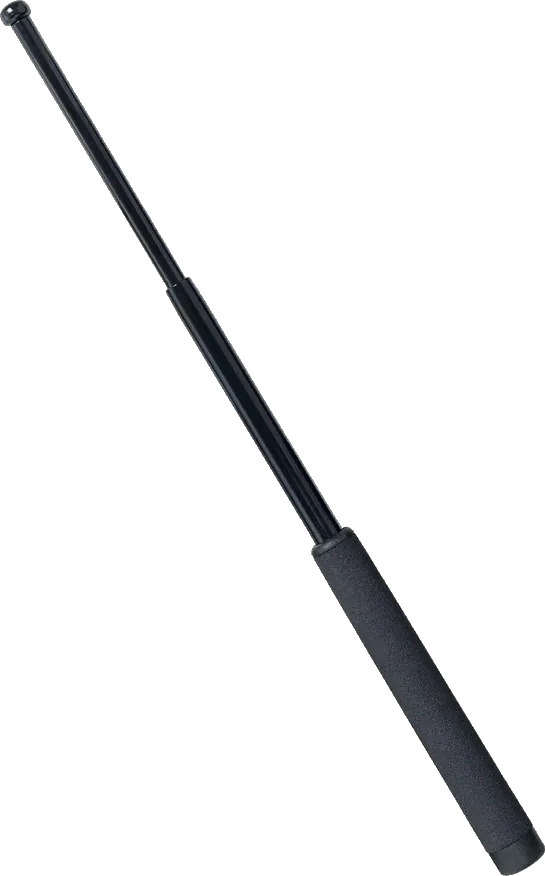 | Type II |
| Electronic Control Weapon | AXON 7 | All patrolling Officers have a department-issued Electronic Control Weapon (ECW), often referred to as a "Taser". The taser has 2 functions and can either be used for pain compliance while in stun mode or in probe mode, where the ECW fires 2 barbs causing neuromuscular incapacitation. | 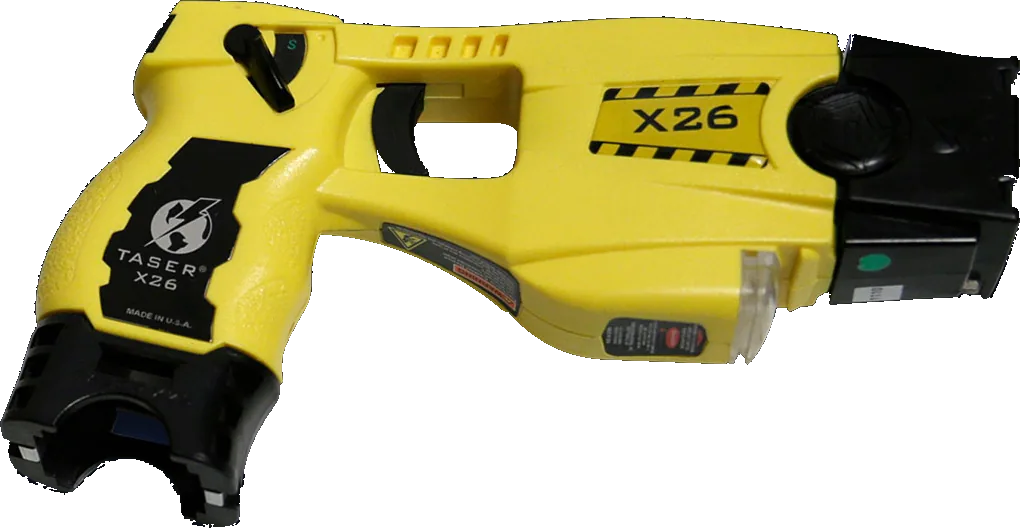 | Type II |
| Less-Lethal Shotgun (Green) | Remington Model 870 StunBag Rounds | All beanbag-certified patrolling Officers have a department-issued Less Lethal Shotgun. This is a Remington Model 870 with a green stock to distinguish the regular Remington Model 870 from the less lethal version. The less lethal Remington Model 870 is equipped with a capacity of 8 Stun Bag Rounds. | 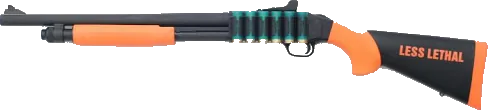 | Type II |
| Use of Force Tool | Model | Description | Image | Category |
|---|---|---|---|---|
| Pistol | Glock 17 9mm | This firearm has a maximum capacity of 17 rounds. It comes equipped with a tactical light. | 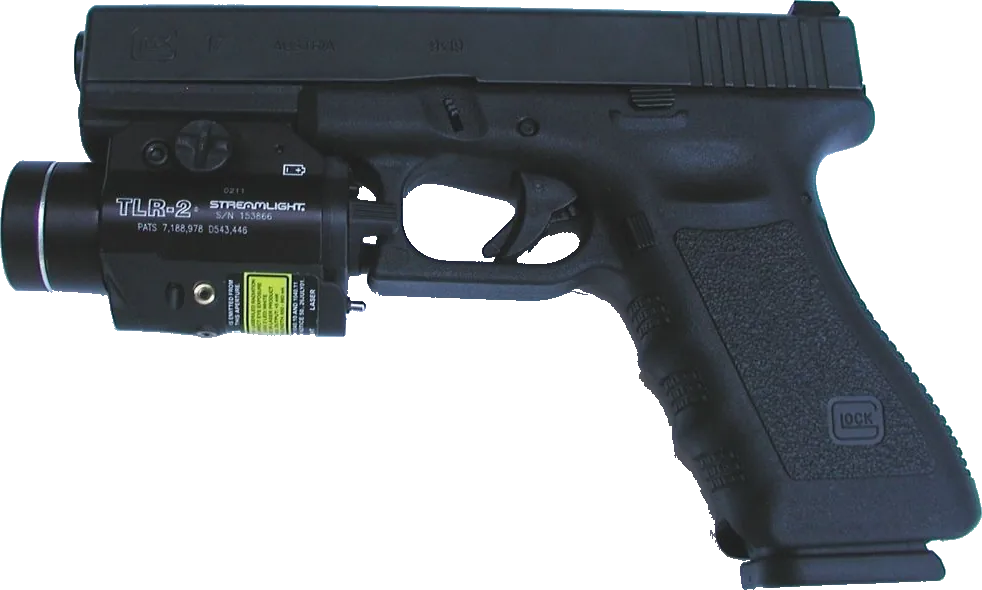 | Deadly Force |
| Rifle | Mk18 Pursuit® RDS 5.56x45mm | All patrolling Officers have a department-issued patrol rifle. This rifle is located in trunk front of all patrol vehicles in a locking system. This firearm has a maximum capacity of 30 rounds. Officers are authorized to attach a tactical light and or grip, however, these are not required to be equipped. The weapon is standard equipped with a EoTech® RDS sight. | 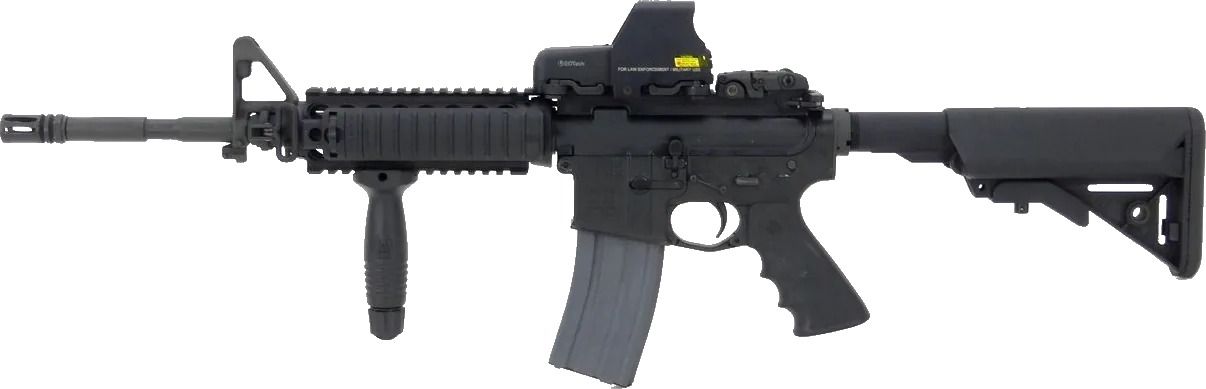 | Deadly Force |
| Shotgun | Remington Model 870 12 Gauge | All patrolling Officers have a department-issued shotgun. This shotgun is located in the trunk of all patrol vehicles in a locking system. This firearm has a maximum capacity of 7 rounds. It comes equipped with a tactical light. |  | Deadly Force |
601-04De-escalation#
The LSPD requires all our Officers to use de-escalation tactics during all incidents they respond to. De-escalation is a process where Officers take certain actions to stabilize a situation with the goal of reducing the immediacy of the threat so that more time, options, and resources are available to resolve the situation. The goal of de-escalation is to gain the voluntary compliance of subjects and prevent the usage of physical force.
601-05Duty to Intervene#
Any Officer present and observing another law enforcement Officer using force that is clearly beyond that which is objectively reasonable under the circumstances shall, when in a position to do so, intervene to prevent the use of unreasonable force.
an Officer who observes another law enforcement Officer use force that exceeds the degree of force permitted by law shall promptly report these observations via any of the following methods to a supervisor:
- Request to 10-1 with a LSPD Supervisor
- Contact an on-scene supervisor directly away from the suspected Officer to prevent an escalation of the scene
an Officer should first gather all the circumstances present on the scene and from there make a determination.
602Physical Force#
Officers can apply physical force to any subject that is actively resisting lawful commands of any law enforcement Officer. Physical force comes in many ways, the simple grabbing of a subject is already considered a Type I use of force application. In this section, we will further outline the different levels of physical force and what types of holds are prohibited.
602-01Neck & Carotid Restraints#
Neck Restraint: Any technique involving the use of an arm or other firm object to attempt to control or disable a subject by applying pressure against the windpipe, or the frontal area of the neck with the purpose or intent or effect of controlling a subject's movement or rendering a subject unconscious by blocking the passage of air through the windpipe. A neck restraint is an intentional force application.
Carotid Restraint: Any technique which is applied in an effort to control or disable a subject by applying pressure to the carotid artery, the jugular vein, or the sides of the neck with the purpose or intent or effect of controlling a subject's movement or rendering a subject unconscious by constricting the flow of blood to and from the brain. A carotid restraint is an intentional force application.
It is the policy of this agency that any form of restraint surrounding the neck is considered Deadly Force. Any person who has received a neck restraint either successful or unsuccessful must be medically evaluated immediately. Whenever the deployment causes the subject to become unconscious for a period longer than 5 seconds medical services shall be prioritized. It is the responsibility of Officers that at all times all injuries are properly treated by medical services. To ensure medical services are safe during the treatment of any suspect, medical services are only allowed to enter the scene when the incident has been declared Code 4, with the exception of TacMed.
Sometimes the need to control a person's head is absolutely needed to protect the person or to prevent the suspect from using his head as a weapon. Officers can use any technique to control the head.
Head Control: A technique utilized to control the movement of a subject's head or neck that does not rise to the level of a neck or carotid restraints.
Weapons:
Approved Weapon: A tool used to apply force that is both specified and authorized by the department.
Approved Use of a Weapon: Use of an approved weapon by an Officer who has been properly trained and certified in the use of that weapon.
Impact Weapon: Any object, whether a tool or fixed object (such as a hard surface), that is used to interrupt or incapacitate a subject, and is capable of causing serious physical injury.
Improvised Weapon: Any untrained object used in a force application.
Less-Lethal Tools: Devices designed and intended to apply force not intended nor likely to cause the death of the subject or Great Bodily Harm.
Spark Display: A non-contact demonstration of an ECWs arcing ability to discharge electricity.
603Electronic Control Weapon#
An Electronic Control Weapon is a device that uses electricity either to cause pain compliance or neuromuscular incapacitation. This device has 2 settings: the taser can either be used in stun mode or probe mode. When the device is in stun mode the front cartridge has been removed and the taser is placed in immediate contact with the suspect skin and the trigger is pulled on the device and causes immediate pain at the point of contact due to the narrow spread of the ECW.
Whenever the device is placed in probe mode the front cartridge is attached and with the help of a red laser, the device is aimed at the suspect. When the trigger is pulled the device shoots 2 barbs intending to hit the suspect. Be aware that the prong spread needs to be sufficient for the device to be successful in probe mode.
The device functions optimally at a distance of 16 feet. Please be aware that the device isn't always successful; it's required to have the lethal cover of other LEO when any weapons are involved.
603-01Verbal Announcements#
Prior to any Officer deploying an ECW, the Officer must (when feasible) give the suspect an attempt to comply or give an audible warning that can be heard by the suspect through the methods of "Police! Stop, or you will be tased!"
Whenever an Officer believes a warning could lead to the scene escalating or believes the audible announcement could cause the suspect to become more dangerous, Officers may deploy the ECW without warning. Prior to deployment, Officers shall shout "Taser, Taser Taser!"
603-02Post Deployment Requirements#
Whenever an Officer deploys a department-issued ECW, Officers must follow the following guidelines this department has established to ensure the proper post-deployment actions of all ECW deployments.
Whenever the ECW is deployed and a successful connection was created causing either pain compliance or neuromuscular incapacitation, Officers shall immediately restrain the suspect with approved department restraints.
Whenever the deployment is in a sensitive area, medical shall be notified.
It is the responsibility of Officers that at all times all injuries are properly treated by medical services.
To ensure medical services are safe during the treatment of any suspect, medical services are only allowed to enter the scene when the incident has been declared Code 4 with the exception of TacMeds.
604Less Lethal Shotgun (StunBag)#
LSPD likes to remain prepared for any situation that may arise on regular patrol for that reason all of our Senior Officers are able to receive training to carry our Less Lethal Shotgun.
The Remington Model 870, 12 gauge shotgun with modified green colored stock and foregrip. This shotgun fires StunBag rounds which are commonly referred to as "Bean Bag" 12 gauge rounds.
When Officers resort to the usage of this weapon, they must consider that this weapon is not to be considered a primary patrol weapon and only to be used when other Less than Lethal weapons have failed.
604-01Carry Requirements#
Only assigned Officers with current certifications will utilize the Less Lethal shotgun on regular patrol. Furthermore, Officers will carry the weapon inside the trunk of their assigned cruiser. The weapon shall not be stored or held in the driver compartment of the cruiser.
604-02 - Injury Warning
2.1. The potential for causing death or serious physical injury with such projectiles is a reality. However, this potential is greatly reduced when impacts to the head and neck are avoided, and when an appropriate medical examination is provided in cases where the subject is struck in an area that might conceal a closed injury, including such areas as the head, chest, back, thoracic and abdominal cavities, and the groin 2.2. When engaging a target, the Officer must evaluate the effectiveness of each round. Compliance and/or incapacitation is the desired goal, and alternative target areas/responses should be considered when rounds are not effective. Alternative target area/response considerations will be based on the circumstances the Officer is encountering and the established safety priorities.
3. Operations of the Less-Lethal Shotgun
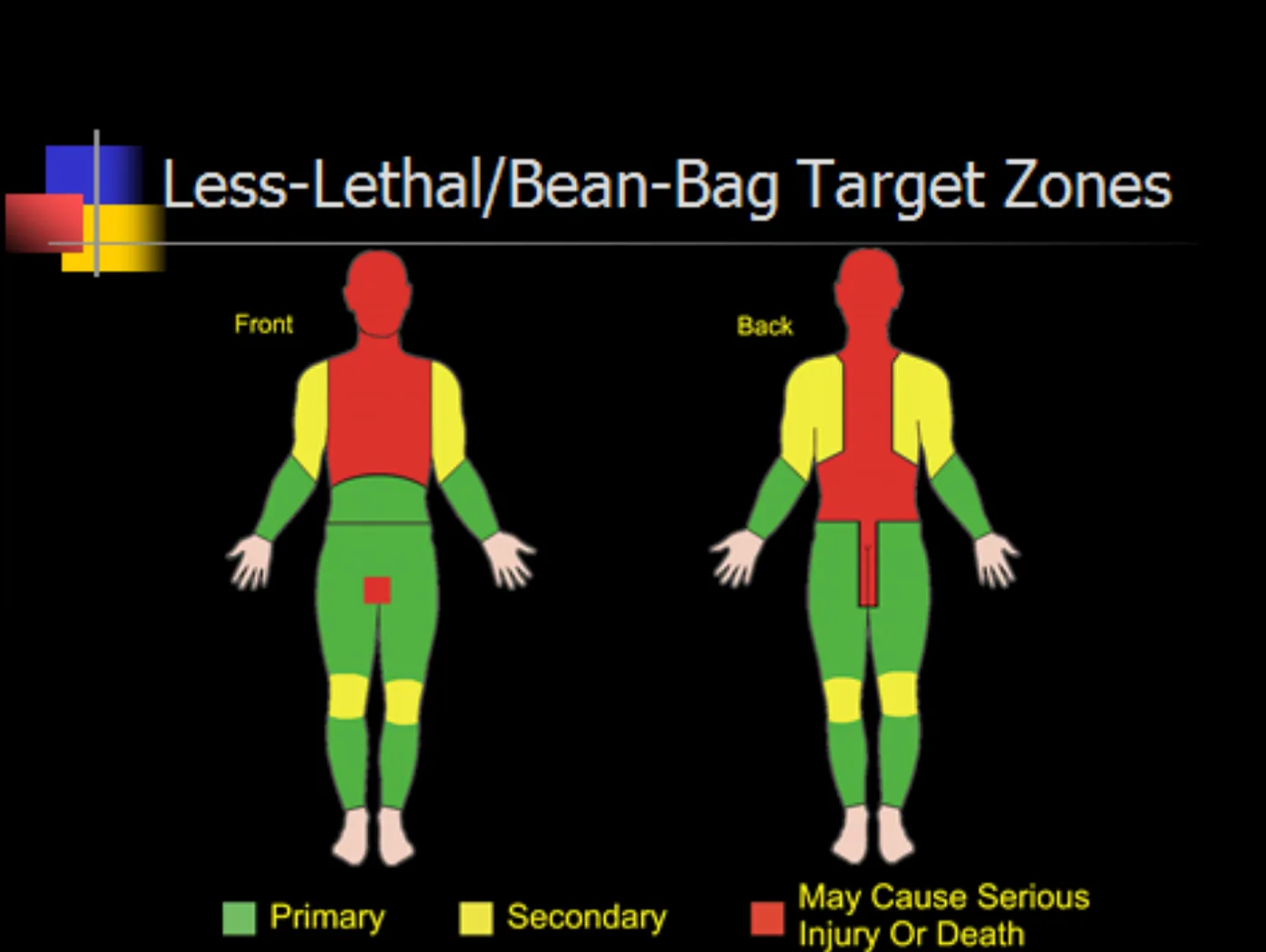
3.1. The impact projectiles (bean bags) will be delivered to suspect target areas based on the circumstances, the established safety priorities, and the level of force authorized 3.2. The impact weapon-training chart is the recognized model for determining contact areas for impact projectile weapons, based on the potential for injury.
3.2.1. Green Areas – These areas will be considered when incapacitation is necessary and minimal potential for injury is the appropriate response. 3.2.2. Yellow/Red Areas – These areas will be considered when an escalation of force above green (areas) is necessary and appropriate, acknowledging an increase in the potential for serious physical injury or death. 3.2.3. Head/Neck – Intentional impacts to these areas will be avoided unless the use of deadly force is justified, necessary, and appropriate.
3.3. Officers may use Less Than Lethal Impact Projectiles when the subject's behavior is considered Assaultive (Bodily Harm) or above. This stage is reached when an Officer's attempt to gain lawful compliance has culminated in a perceived or actual attack on the Officer or others (to include self-harm, i.e. suicide attempts).
3.3.1. Less Than Lethal Impact Projectiles may be used when the Officer makes the reasonable assessment that such actions by the subject would not result in the Officer's or others' death or serious bodily harm. 3.3.2. The use of impact projectiles (bean bags) is considered a level of force that when deployed to designated areas (see impact weapon training chart) of the suspect(s) body is considered "less than lethal" or unlikely to cause death or serious physical injury. The use of kinetic energy impact projectiles is considered Deadly Force if intentionally deployed at the head or neck. 3.3.3. Dedicated System - The issued shotgun will be dedicated to less-lethal projectiles and marked in some fashion consistent with such designation (i.e. orange stock). Officers assigned will inspect the chamber and magazine each time the weapon comes under their control to ensure the total absence of lethal ammunition.
3.3.3.1. No lethal ammunition will be stored with this weapon
3.3.4. Back-up Officers armed with lethal weapons should provide cover in cases involving any armed and/or dangerous subjects, even if no firearms are involved. 3.3.5. All visible injuries will be photographed and documented.
Policy 3. - Operations of the Less-Lethal Shotgun
3.3.6. Chart advising the Target Zones for the Less Lethal Shotgun
4. Post-Deployment Responsibilities
4.1. When impact projectiles have been discharged, Officers shall:
4.1.1. Contact a LSPD Supervisor if available .
4.1.2. Restrain and secure the subject, as soon as possible.
4.1.3. It is required to arrange medical for all persons who have been struck by impact projectiles to be medically assessed prior to booking.
4.1.4. Ensure the subject's injuries or complaints of injury (if any) are appropriately treated by medical personnel.
4.2. No medical personnel shall be moved into the scene until the scene is declared Code 4 with the exception of TacMed.
5. Maintenance
5.1. All certifications must be up to date according to each weapon system company's standards.
5.2. Extended range impact weapons shall be inspected when the weapon is initially obtained and/ or issued and at least annually to ensure mission readiness by the Command Assistant. Any weapon found to be not working properly will be taken out of service for repairs.
5.3. LSPD Command Staff will notify all affected personnel regarding any weapon that has been taken offline for repairs
605Deadly Force#
LSPD Officers may use lethal force only when necessary—when the Officer has a reasonable belief that the subject of such force poses an imminent danger of death or serious physical injury to Officers or another person. If feasible, a verbal warning to submit to the authority of the Officer is given prior to the use of deadly force.
606Discharging a Firearm While in a Patrol Vehicle#
Officers may discharge their firearm from inside their vehicle if all following prerequisites are applicable, occur, and they are putting themselves or others in more danger by exiting their vehicle:
- A suspect is actively shooting at law enforcement Officers or civilians.
- A suspect is attempting to ram the Officer's vehicle and the Officer is unable to retreat to safety.
Officers may not discharge their firearm from inside their vehicle if the following conditions are present:
- Speeds of more than 35 MPH (an Officer riding as a passenger is excluded from this stipulation).
- Lack of vision (e.i Heavy fog and/or rain or a sharp curve in the road).
- If there is anyone other than the suspect in the bullet's trajectory.
After an Officer has discharged their firearm from inside their vehicle they must discontinue use of the vehicle as it is no longer road worthy. Officers must also follow the After Action Clearance policy.
607Discharging a Firearm Into a Vehicle#
Officers may only discharge their firearm at/into a vehicle if their or someone else's life is in immediate danger and they are not able to take any evasive action(s).
Using Best Judgment:
Officers must use their best judgment and have high situational awareness in high-risk scenes involving shots fired.
- Officers will use their best judgment with respect to the trajectory of the bullet (e.i any obstacles that may stop the bullet from hitting the suspect)
- Officers must ensure that if they miss their intended target, no innocent bystanders or other law enforcement Officers will be struck.